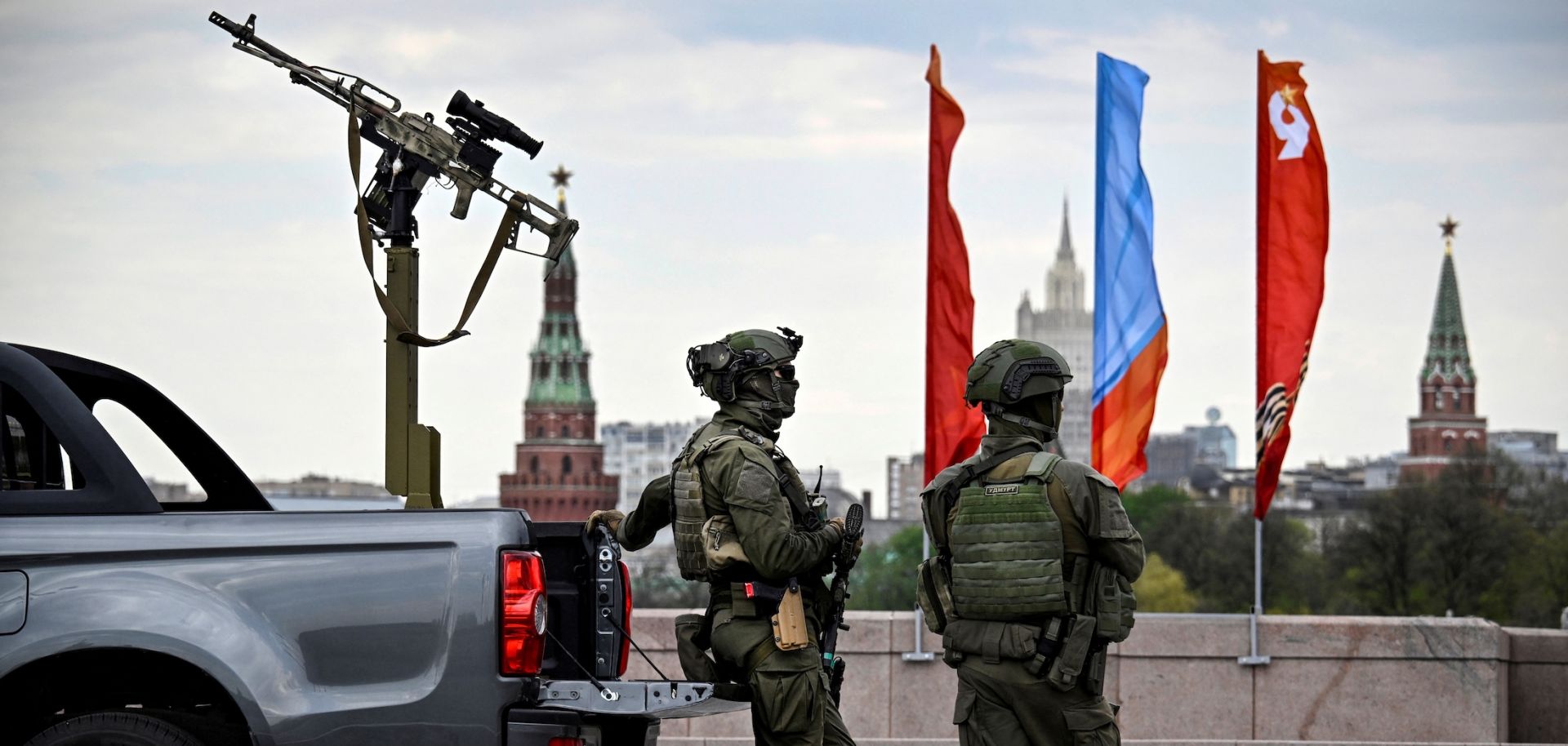
Russia will likely avoid a direct disruption of its May 9 Victory Day parade, but Ukraine's expanding long-range strike capabilities -- while unlikely to threaten Moscow's regime stability or war strategy -- will increasingly raise the political, economic and psychological costs of the war ahead of the September Duma elections. On May 6, Ukraine entered a unilateral ceasefire, pledging to respond only symmetrically to Russian aggression. Later the same day, Ukrainian President Volodymyr Zelensky said that Russian forces ignored the cessation, citing 1,820 strikes that Ukraine characterized as violations. This occurred despite Moscow's own proposal for a Victory Day truce on May 8-9, even as it threatened a "massive missile strike" on central Kyiv in the event of disruptions to commemorations. Russian President Vladimir Putin first floated a possible temporary ceasefire in his call with U.S. President Donald Trump on April 29. Russia's Defense Ministry later said the May 9...