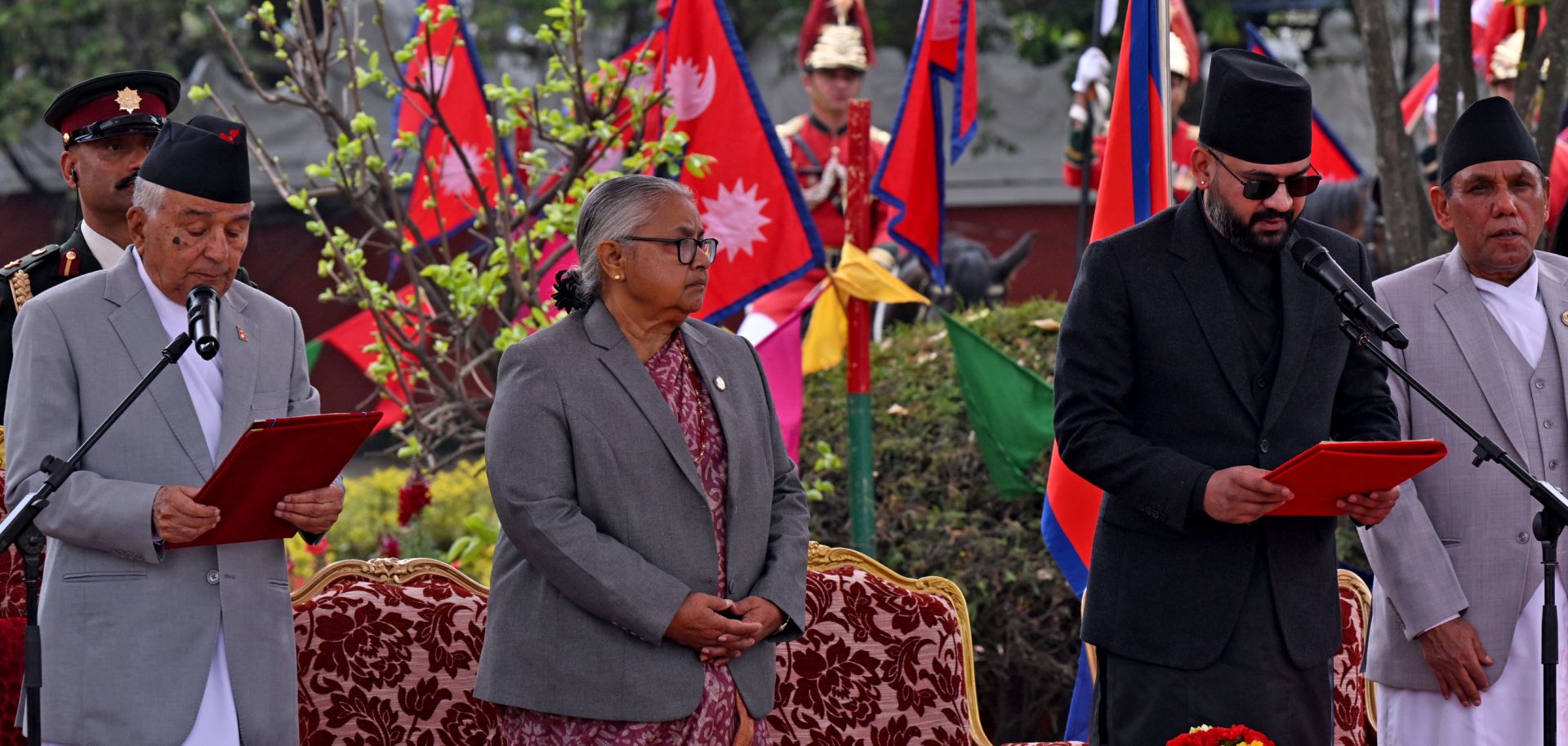
Nepal's newly elected government faces the immediate challenge of managing energy and economic shocks from the ongoing Iran war. In the longer term, it will face enduring popular pressure to improve living conditions and reform the unstable political system. On March 27, Nepal's president swore in former Kathmandu Mayor Balendra Shah as the country's new prime minister, a day after the president swore in lawmakers elected in the country's March 5 general elections. Citizens voted overwhelmingly for the four-year-old Rastriya Swatantra Party, or RSP, in the country's March 5 polls -- Nepal's first since September 2025 anti-government protests helped oust then-Prime Minister K.P. Sharma Oli and his government. The RSP won 182 of 275 parliamentary seats, the largest single-party majority since the country abolished its monarchy in 2008, allowing it to govern without additional partners. The party's unprecedented victory and rebuke of the political establishment underscored the severity of popular...